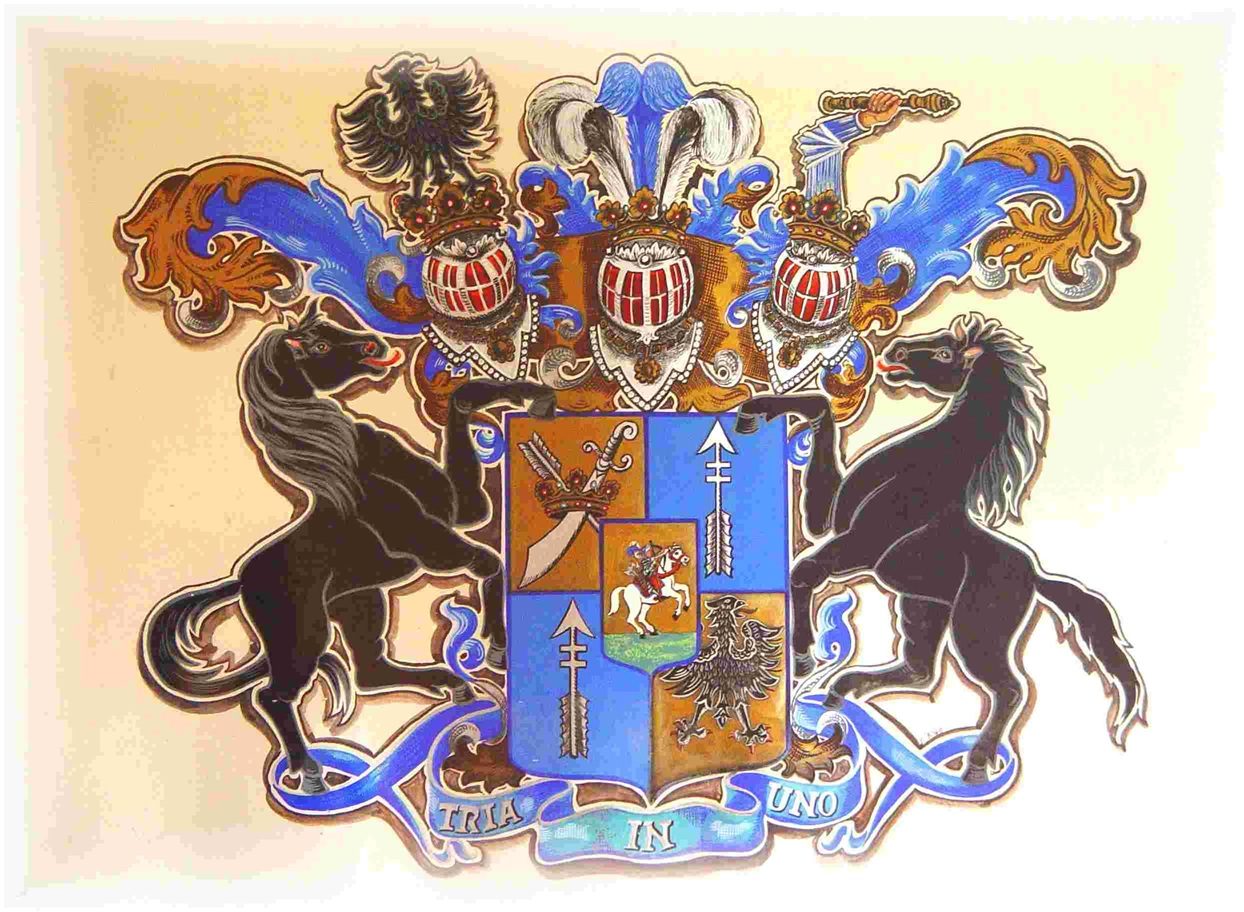
mémoriaux
Église de Veliki Sorotchyntsi
En 1732, Danylo Apostol a fait construire une église près de Homutetz où ses dépouilles ont été inhumées sous la nef de l'édifice. L'église, appelée l'église de la Transfiguration, est restée intacte après près de 300 ans.
Cathédrale Popova-Sloboda et Mémorial de Boryne
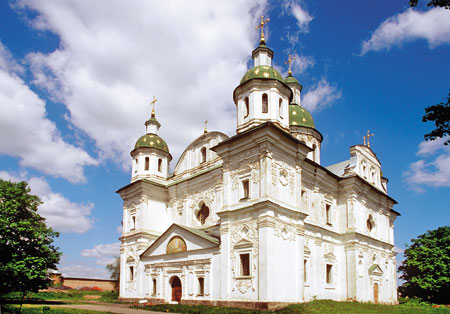
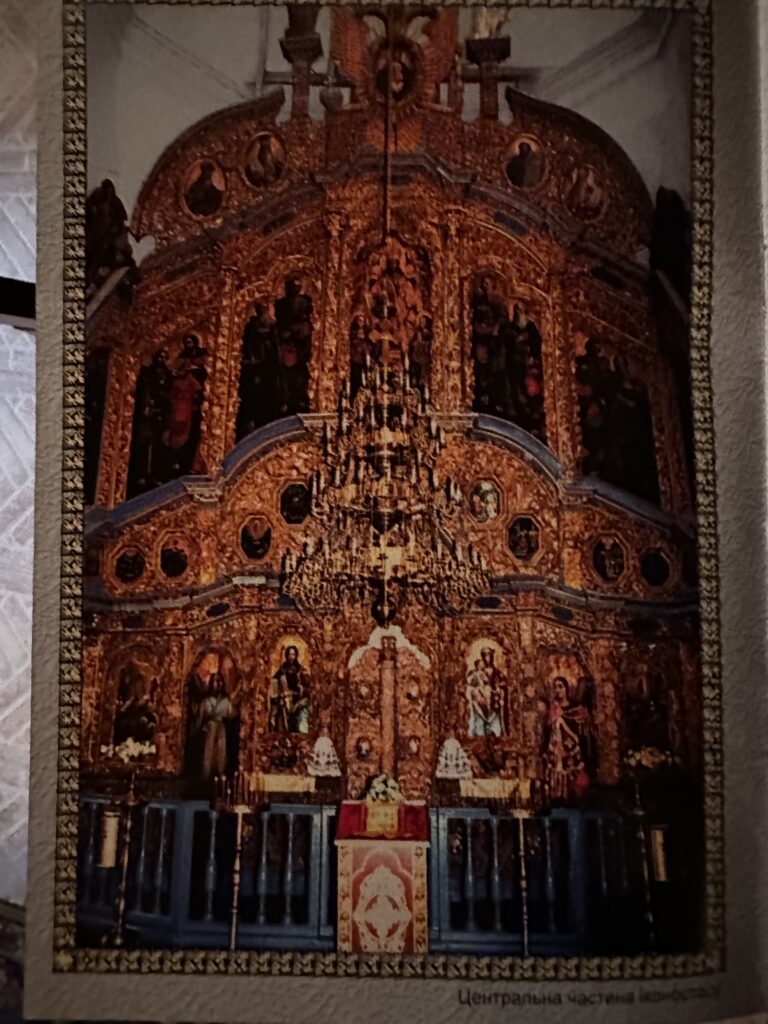
En 1913, Vladimir Mouravieff-Apostol-Korobyine et son épouse Nadejda ont fait construire une cathédrale à Popova-Sloboda pour honorer les 300 ans du règne de la dynastie des Romanov sur la Russie. Les bolcheviks l'ont détruite en 1929 et ont utilisé les briques pour d'autres bâtiments. De nombreux autres édifices religieux ont subi le seul et même sort. Seul le poste de garde est resté intact et est devenu le bureau de poste du village. Après sa fermeture, la ville a remis les clés du bâtiment à Nicolas Mouravieff-Apostol-Korobyine en 2012 à l'occasion de son centenaire au centre du village.
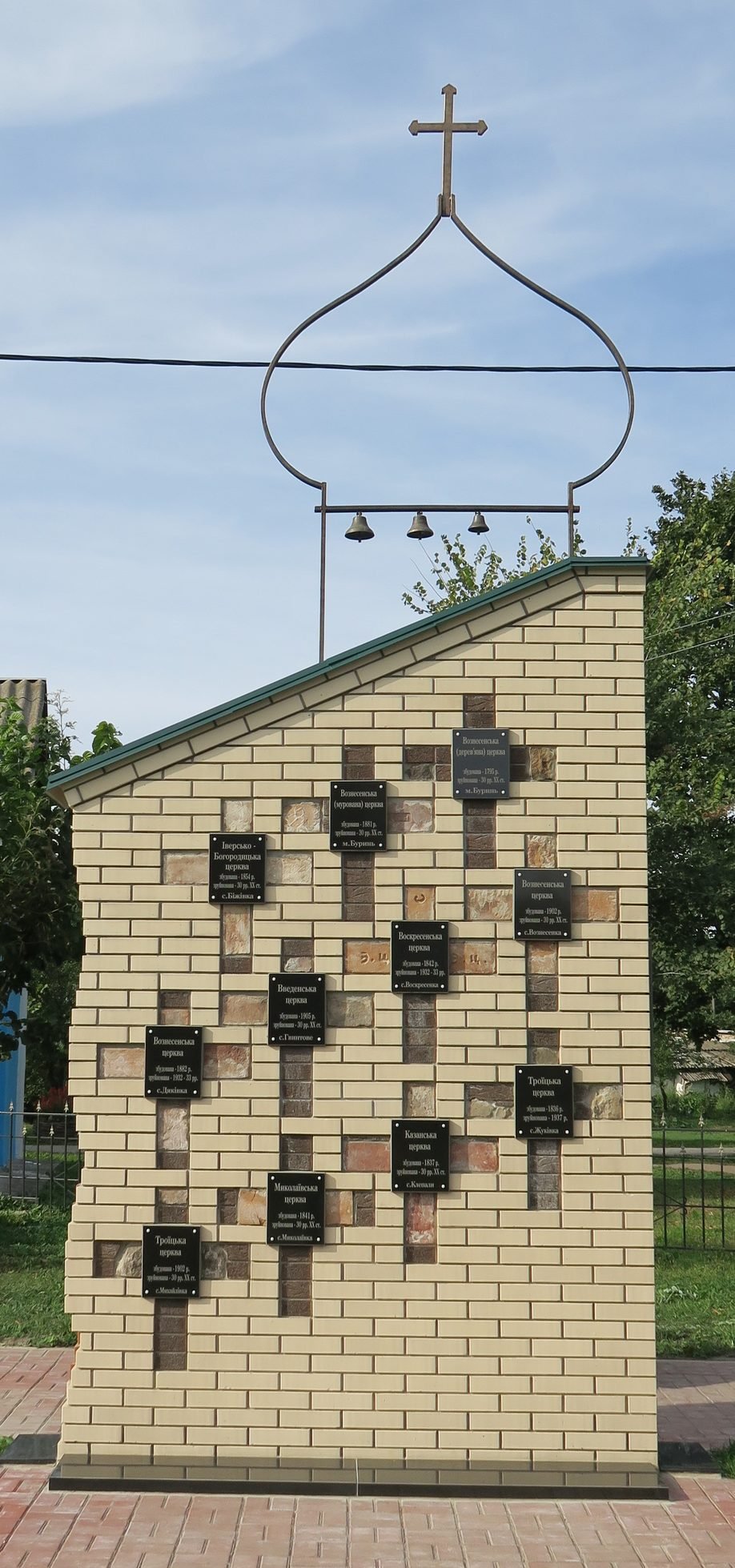
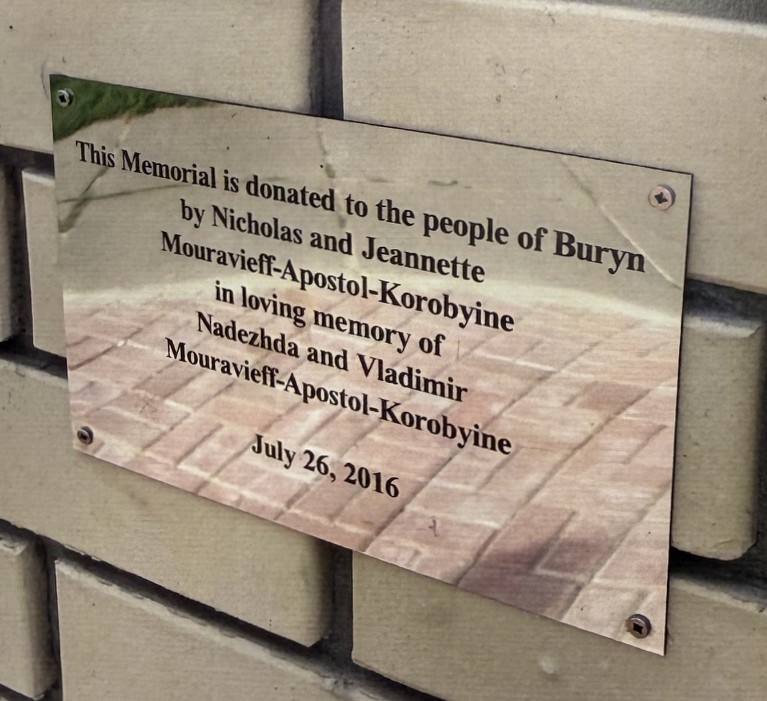
En 2016, Nicolas Mouravieff-Apostol-Korobyine et son épouse Jeannette ont construit un mémorial dans la ville de Bouryn, dans l'oblast de Soumy, pour rendre hommage à chacune de ces églises et cathédrales détruites. Chaque église détruite possède une plaque et un morceau de sa structure d'origine sur la façade du mémorial.
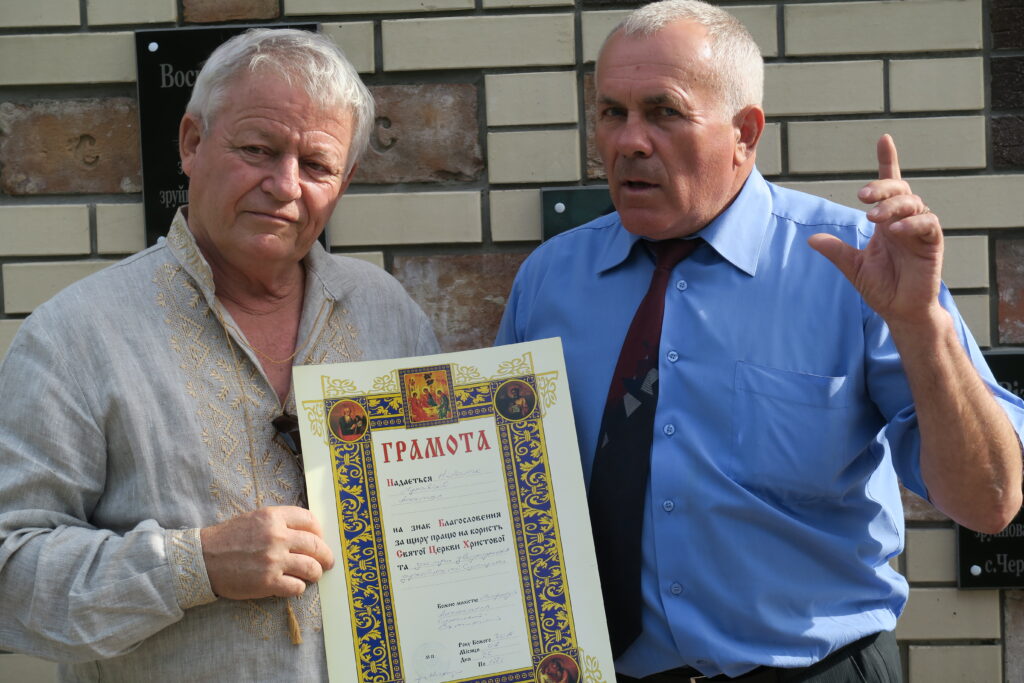
Le maire de Bouryne remet à Nicolas Mouravieff-Apostol-Korobyine un certificat d'appréciation pour la construction du monument
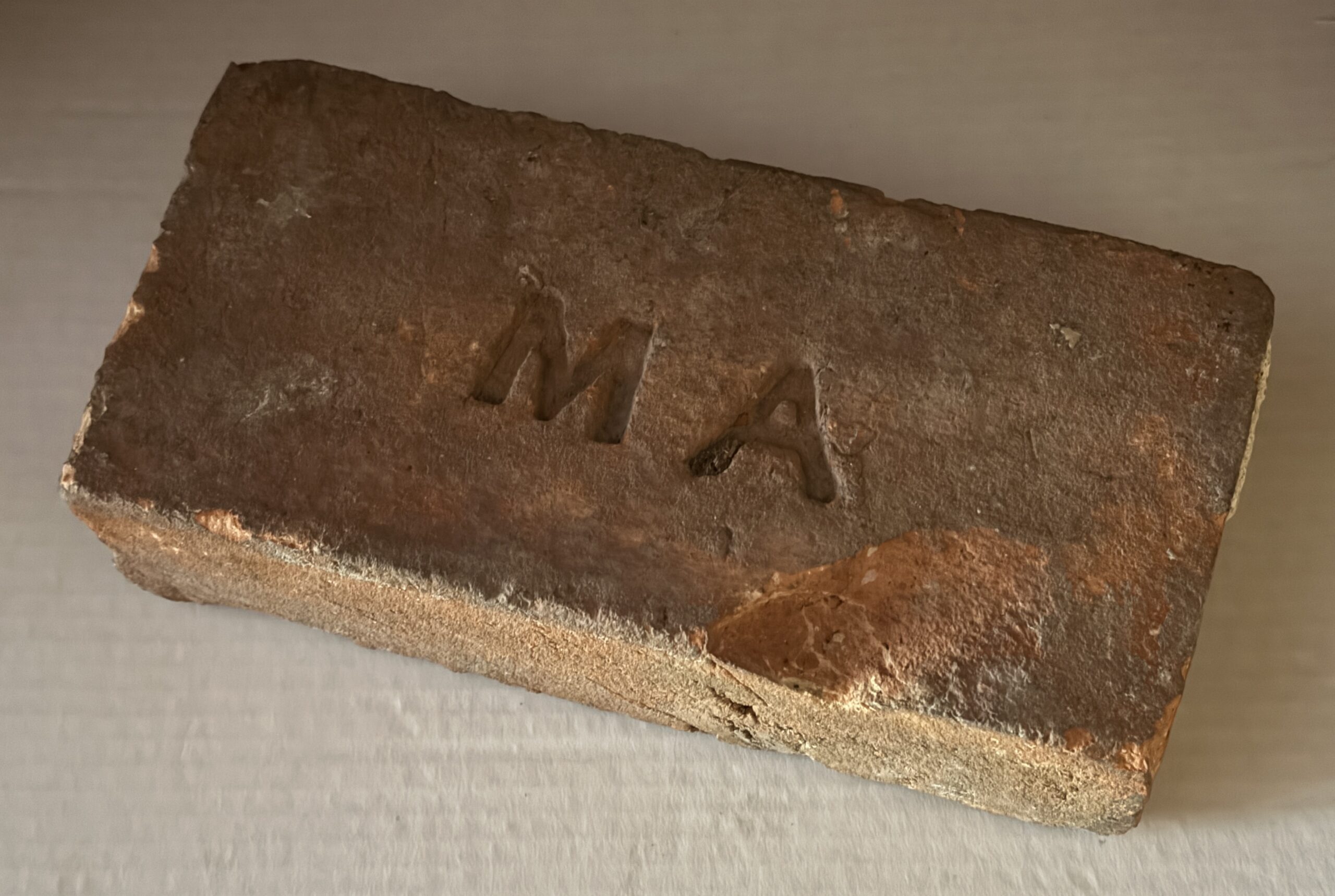
M-A Brick
Le palais Apostol à Homutetz a été initialement construit au début des années 1700 selon des méthodes standard utilisant l'argile, des rondins et du bois. Au début des années 1800, Ivan Mouravieff-Apostol a agrandi le palais en y ajoutant deux ailes s'étendant à partir du bâtiment central. Le design imitait l'architecture parisienne, reflétant l'influence française sur Ivan.
Ces ailes ont été construites à l'aide de briques produites dans la briqueterie du domaine et marquées des initiales “ MA ”. Les briques ont également été utilisées pour d'autres bâtiments sur le site, et l'usine a finalement fermé lorsque Ivan est parti pour San Remo. Les briques étaient beaucoup plus grandes que les briques standard d'aujourd'hui, mesurant environ 10 pouces de long, 3 pouces d'épaisseur et 4 pouces de largeur. L'argile utilisée pour leur fabrication provenait des terres du domaine.
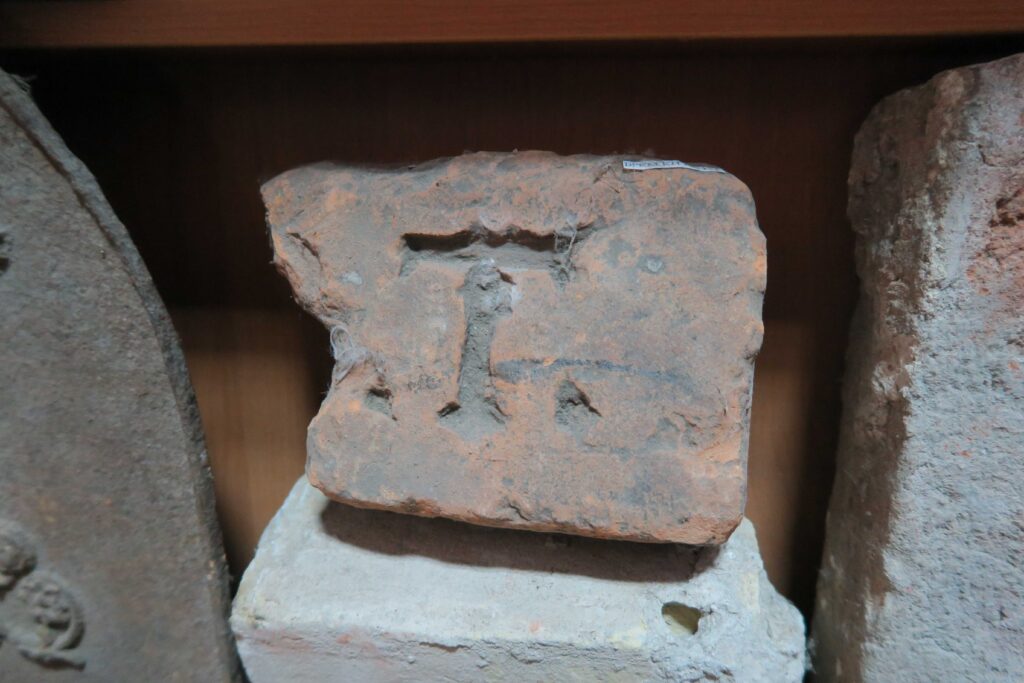
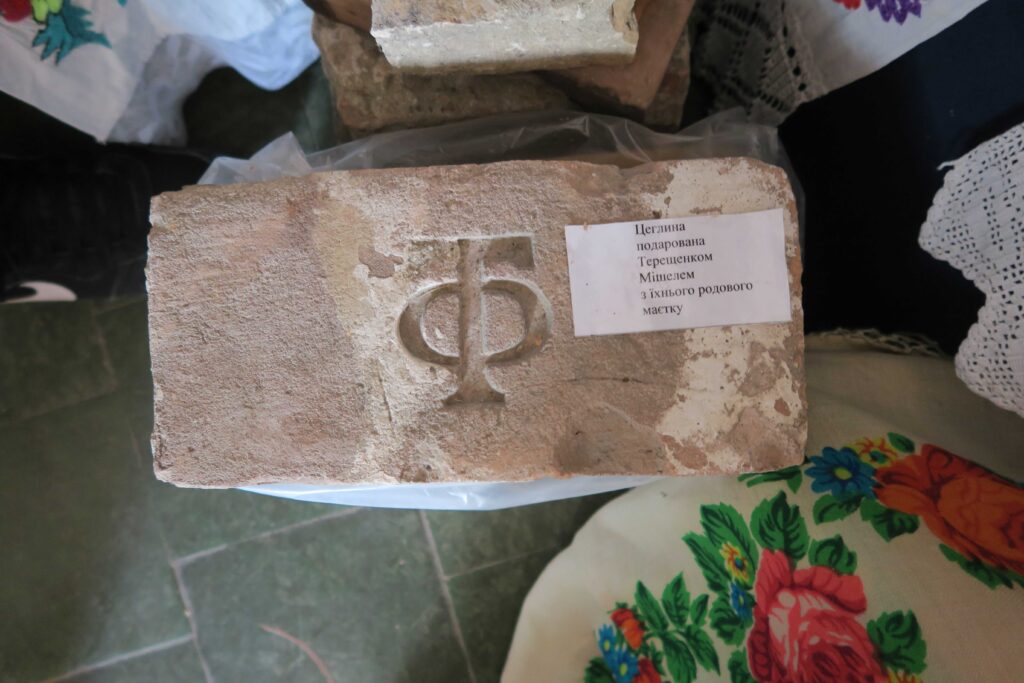
Les Tereshchenko possédaient également une briqueterie à Chervone, et chaque brique portait l'initiale “ T ”. Certaines briques portent la lettre cyrillique “ Ф ”, vraisemblancement pour Fedor.
Croix commémorative de Homutetz
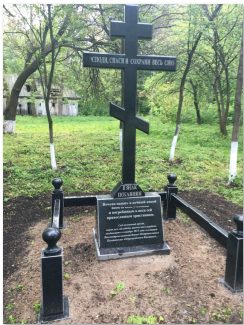
EN SIGNE DE REPENTANCE
“En signe de repentir.”
L'inscription principale se lit comme suit :
Éternelle mémoire et repos éternel
à tous les défunts de tous les temps
et ensevelis dans ce village
aux chrétiens orthodoxes.Cette croix votive,
le signe de l'éternel triomphe de la vie sur la mort,
érigé le 6 septembre 2015 et consacré
Par Son Éminence le Métropolite
de Philippe de Poltava et de Mirgorod.
Une traduction anglaise naturelle est :
“Mémoire éternelle et repos éternel à tous les chrétiens orthodoxes qui ont disparu à travers les âges et sont enterrés dans ce village.
Cette croix de dévotion, symbole de la victoire éternelle de la vie sur la mort, a été érigée le 6 septembre 2015 et consacrée par Son Éminence Philippe, métropolite de Poltava et Myrhorod.”
L'inscription sur le bras horizontal de la grande croix se lit comme suit :
Seigneur, sauve et protège tout ce lieu
Signification “Seigneur, sauve et préserve ce village.”
La croix commémorative se dresse à Homutetz près du bâtiment principal du palais, à environ 500 mètres de la petite église.
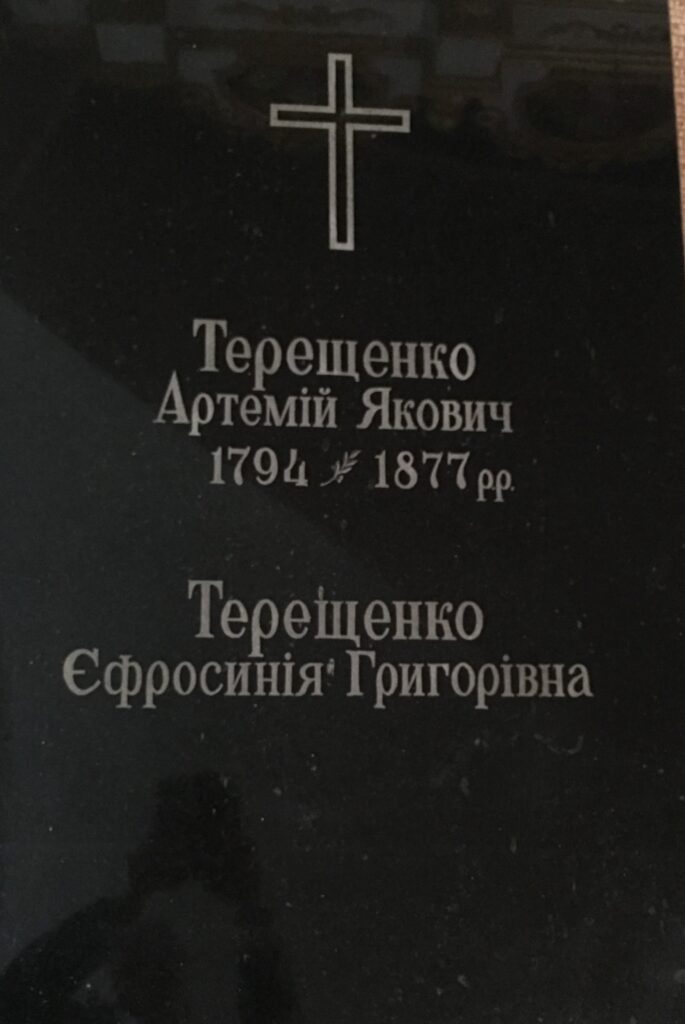
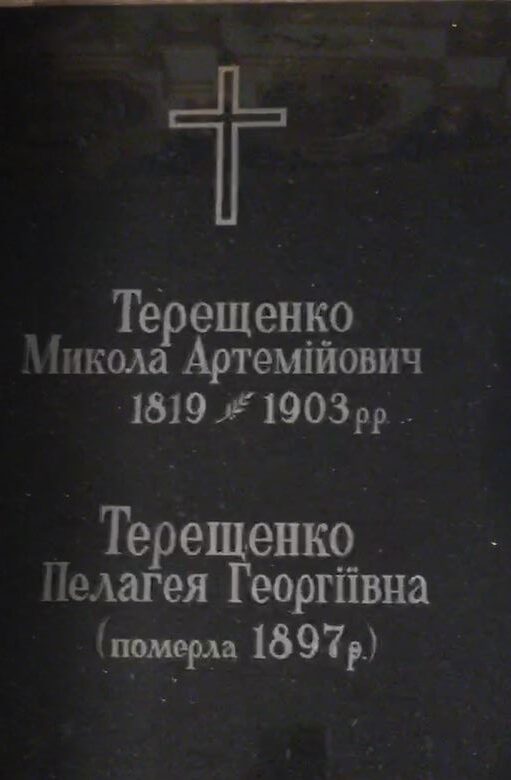
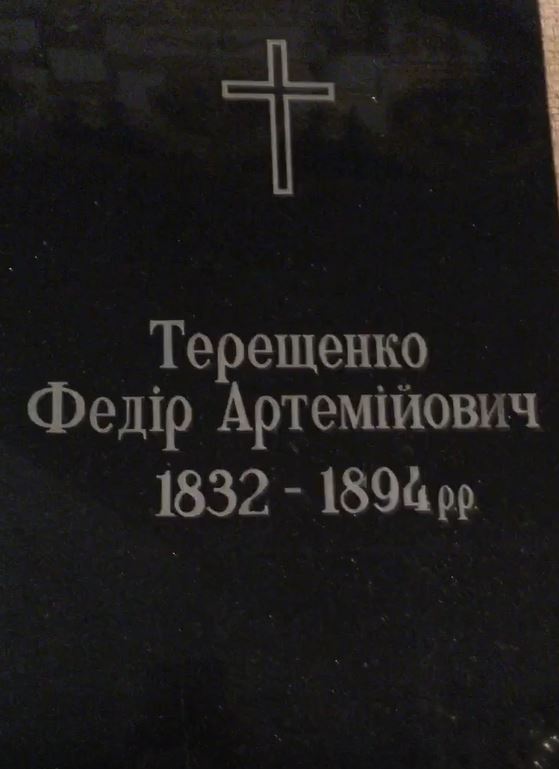
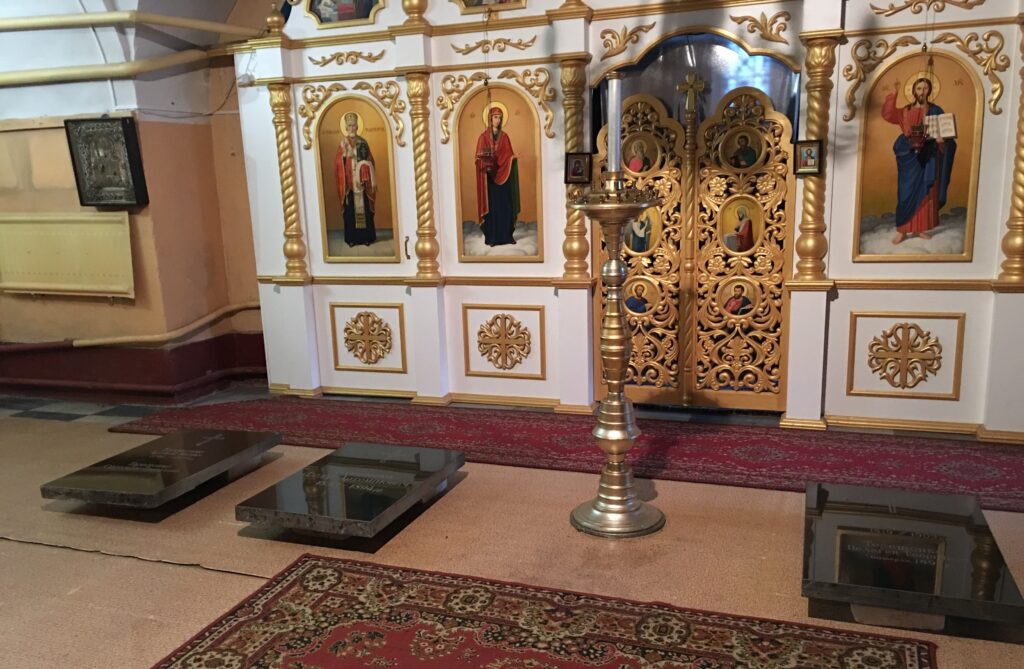
Tombeaux de la famille Tereshchenko
Les tombes de la famille Térestchenko sont situées dans la cathédrale des Trois-Anastasies à Hlukhiv, dans l'oblast de Soumy, en Ukraine. La cathédrale a été construite par la famille Térestchenko à la fin du XIXe siècle et consacrée en 1893, et la crypte a été aménagée à l'étage inférieur, sous le maître-autel. La cathédrale a été nommée l'une des sept merveilles de l'Ukraine et possède un magnifique iconostase en marbre blanc de conception néo-russe/byzantine. L'iconostase est un mur qui sépare l'autel de la nef ou de la zone principale de l'église. Il comporte généralement de nombreuses icônes et peintures qui y sont exposées, reflétant la vie du Christ et de ses Apôtres.