Portraits and Frames
Before the advent of photography, family portraits were usually commissioned by well known artists and oil on canvas was the preferred medium. While most were made lifesize some were produced in miniaturized form and included on small boxes or pendants. The advent of photography in the mid-1800s made portrait production available to a far wider spectrum of society by the start of the 20th century. In the late 1880s studios in Paris and Berlin produced fine portraits on glass for discerning customers but it was very costly so only the very rich could afford such things.
Around 1888 Fedor Tereshchenko sat for his portrait in one such Parisian studio and obtained a large 9" x 12" size reverse negative on glass image of his face which was then framed in an ebony wood with gold guilt frame to be displayed in the salon of his Kiev residence.
Dimensions
- Framed: approximately 15 × 12 inches (38 × 30 cm)
- Glass image: approximately 8 × 10 inches (20 × 25 cm)
- Orientation: Vertical oval portrait
Description
This remarkable portrait depicts Fyodor (Fedor) Artemyevich Tereshchenko (1832–1894), one of the leading Ukrainian and Imperial Russian sugar industrialists, philanthropists, and patriarch of the Tereshchenko family.
Unlike conventional paper photographs, the image is formed directly on a transparent glass plate. Examination shows the image remains translucent when illuminated from behind, with the photographic emulsion carried directly on the glass. Viewed from the front the portrait is exceptionally sharp; viewed from the reverse the image becomes slightly diffuse, characteristic of an emulsion-on-glass photographic process.
The portrait remains housed in its original black ebonized wood frame with gilt floral ornamentation, almost certainly commissioned at the same time as the photograph.
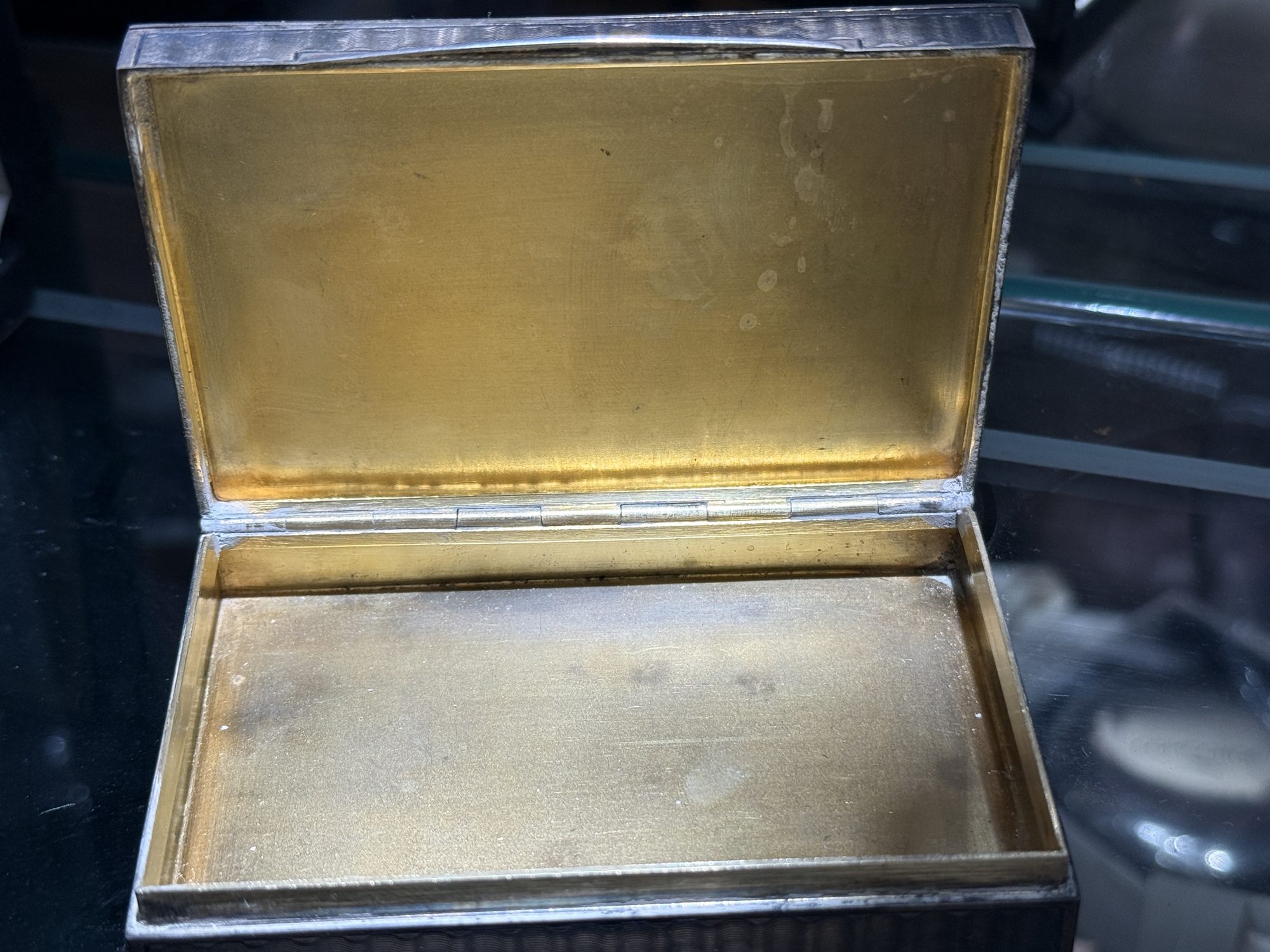
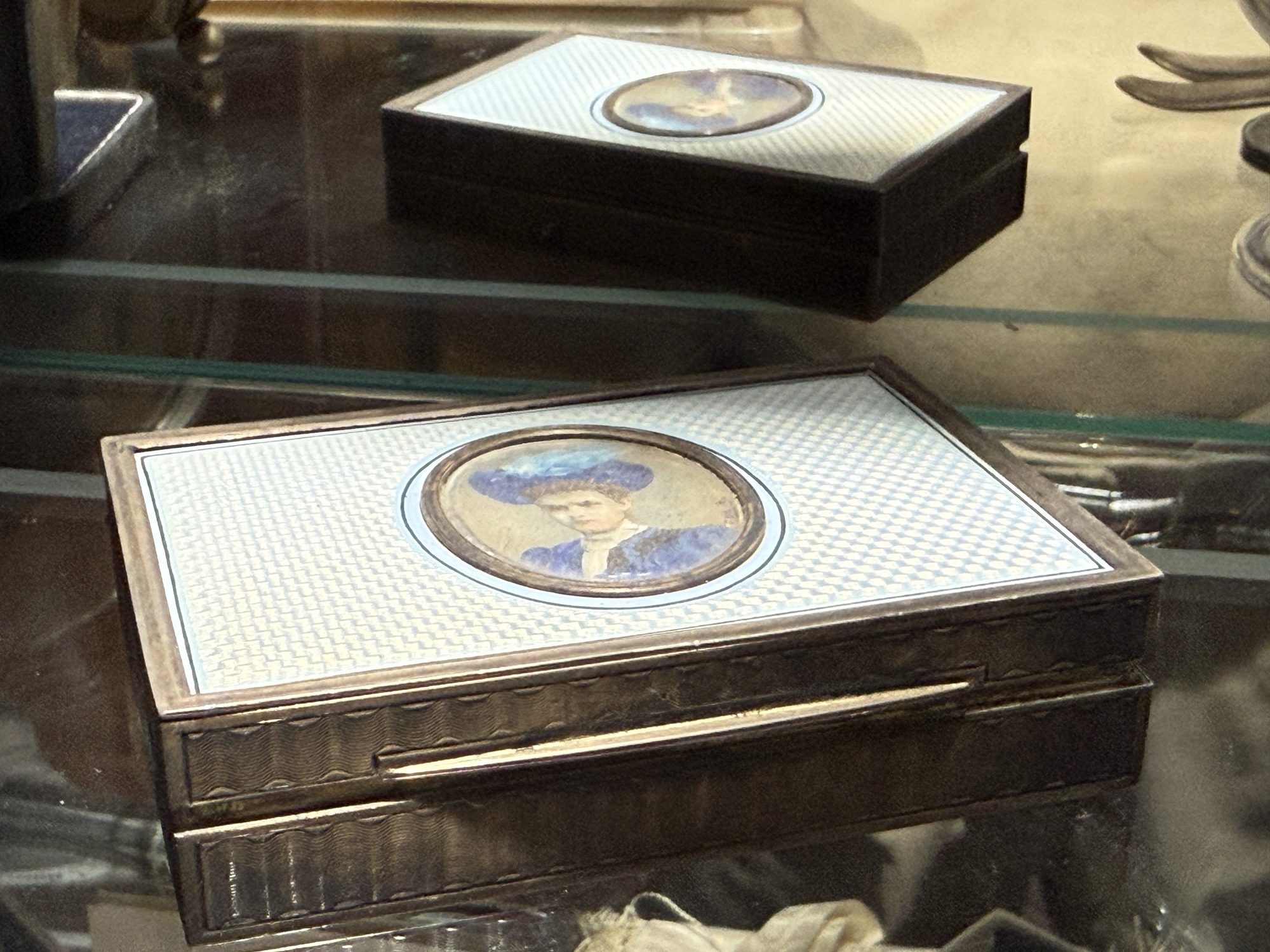 In 1909, Nadezhda Federovna Tereshchenko sat for a miniature portrait in Berlin. The artist was Otto Mylius Oskar Ulbrich. He was a German Kunstmaler, portraitist, porcelain-plate painter, enamel painter, miniature painter, and portrait painter, born 2 Sept. 1876 in Lichte and died 23 Apr. 1943 in Hanau. It was done in watercolor probably on ivory and mounted under glass on a silver Fabergé style enameled box. The finished box was given to Nadezhda by Vladimir Vladimirovitch Mouravieff-Apostol-Korobyine prior to their marriage.