Maker: Friedrich Baumann (F. Baumann), Imperial and Royal Court Watchmaker (K.u.K. Hof-Uhrmacher), Vienna, Austria
Date: Circa 1885
Place of Manufacture: Vienna, Austria
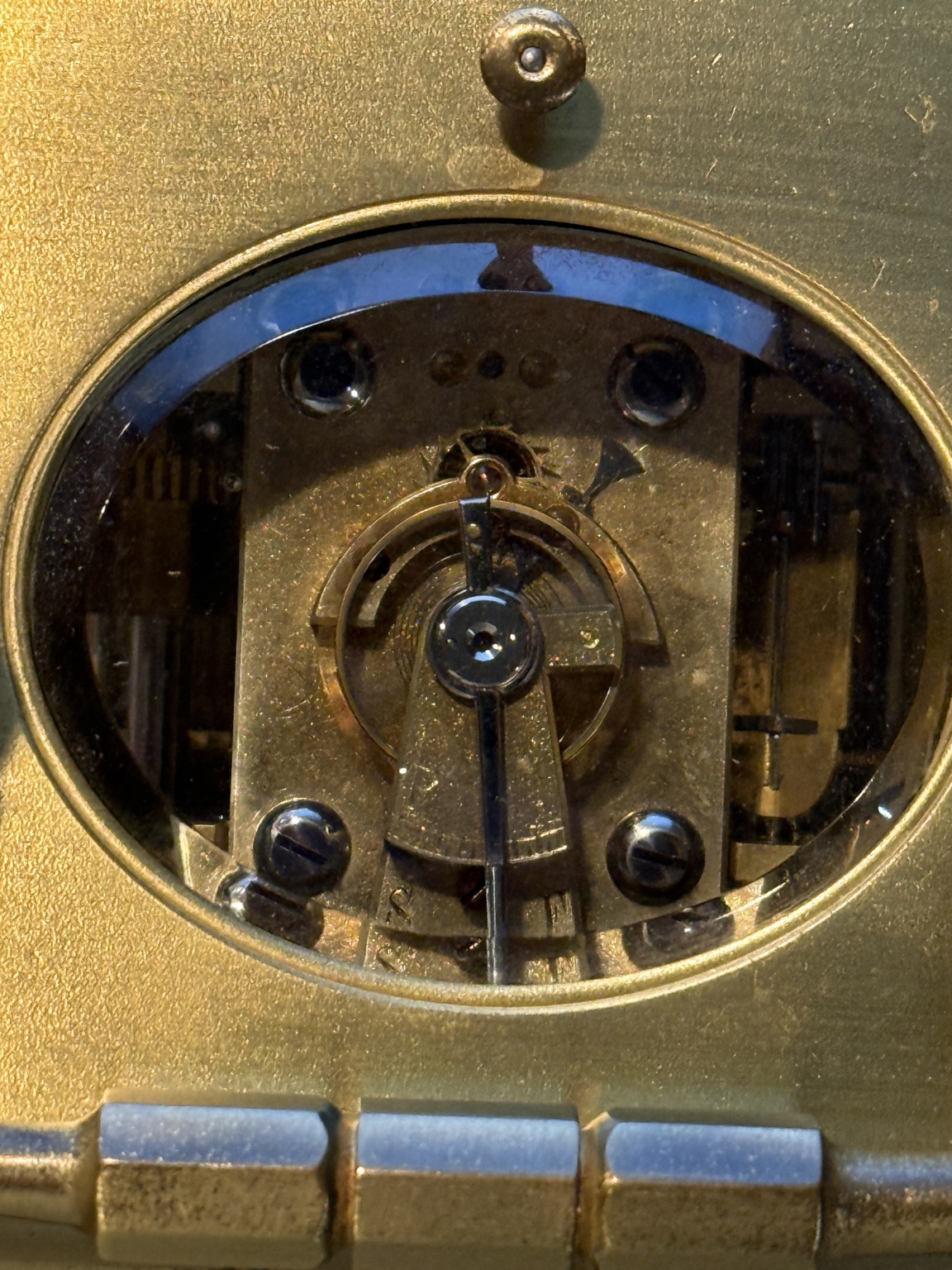
Materials: Gilt brass, beveled glass panels, enameled dial, steel, brass movement, jeweled platform escapement, original leather traveling case with velvet-lined interior.
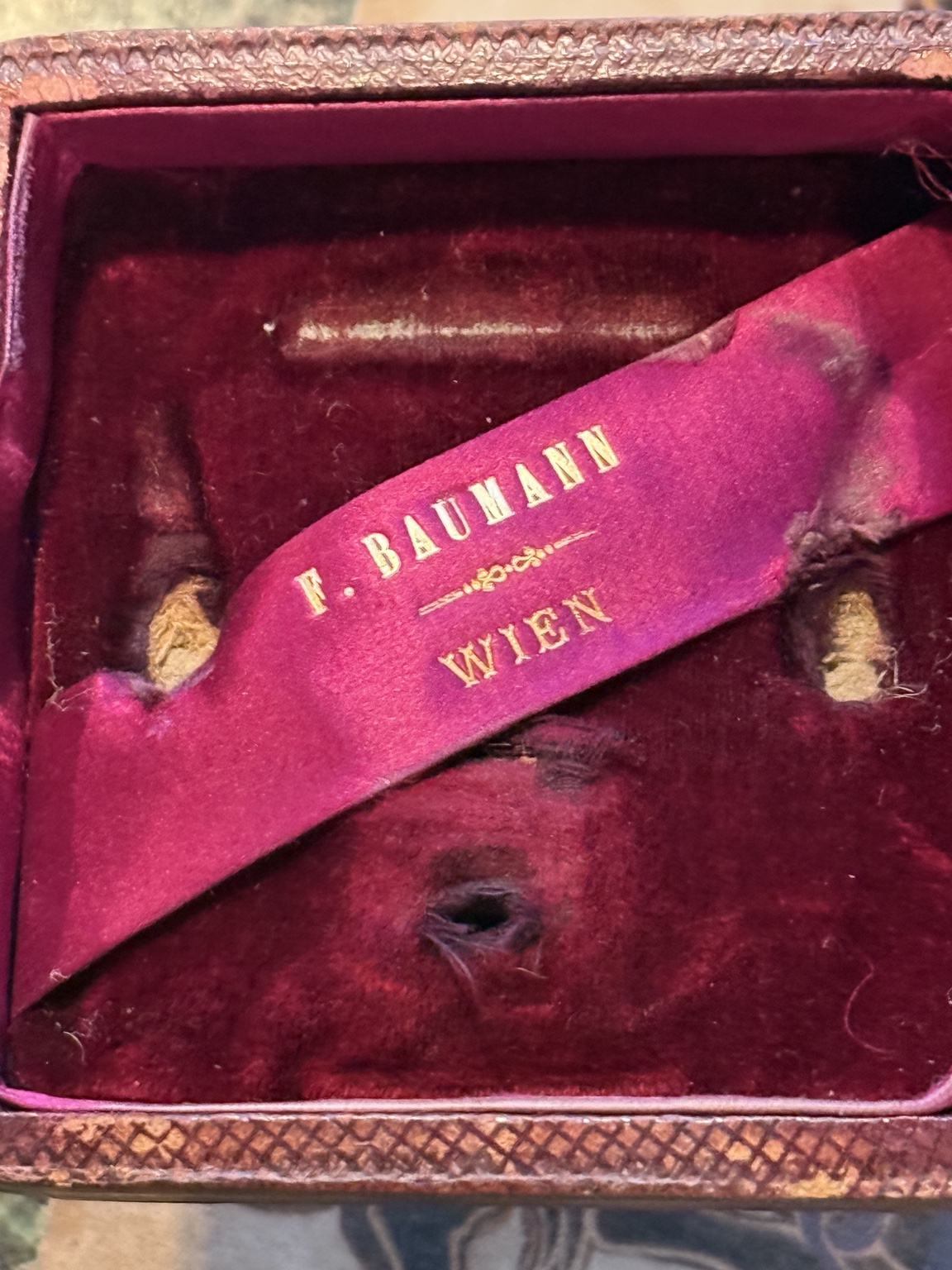
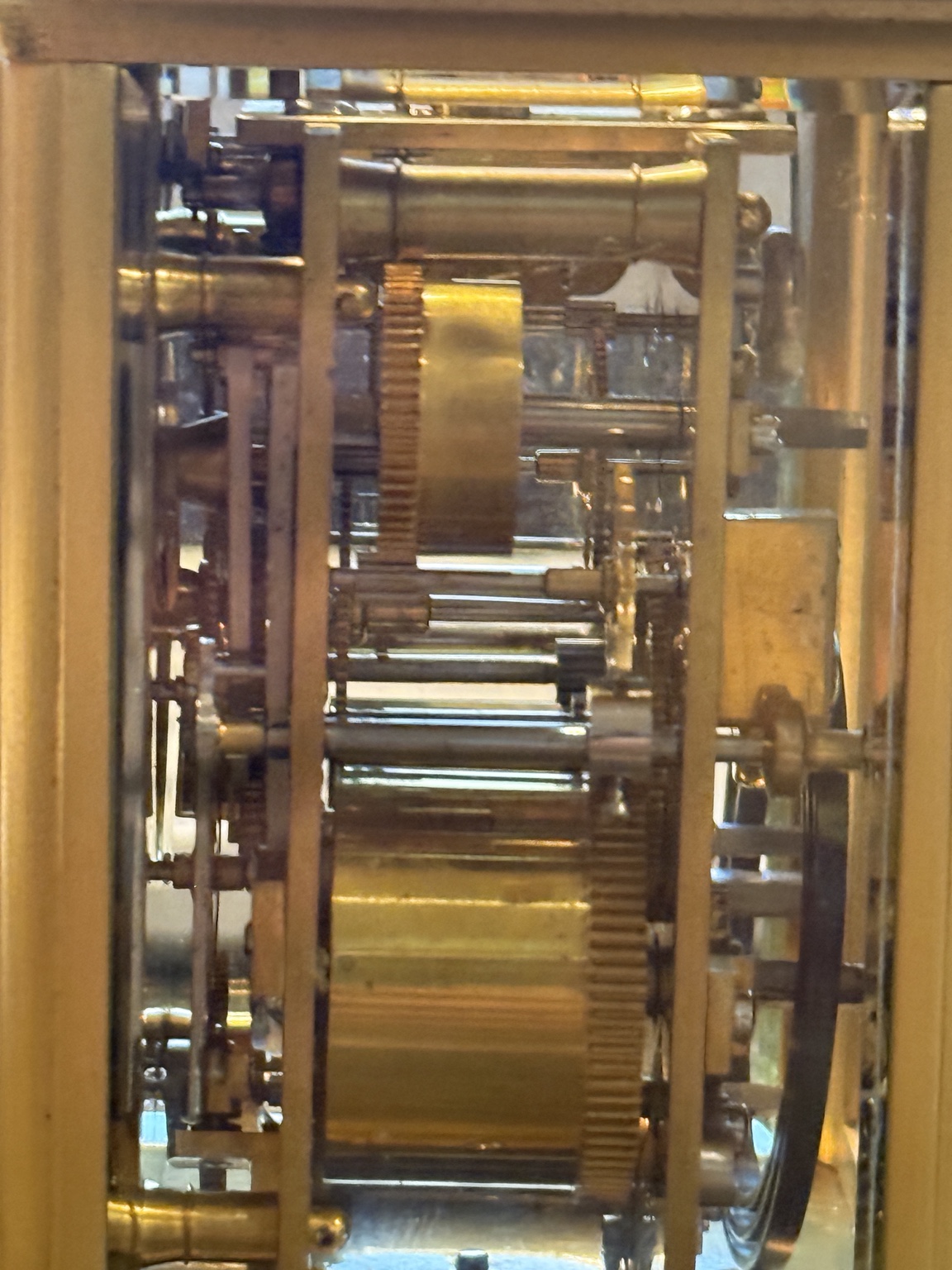
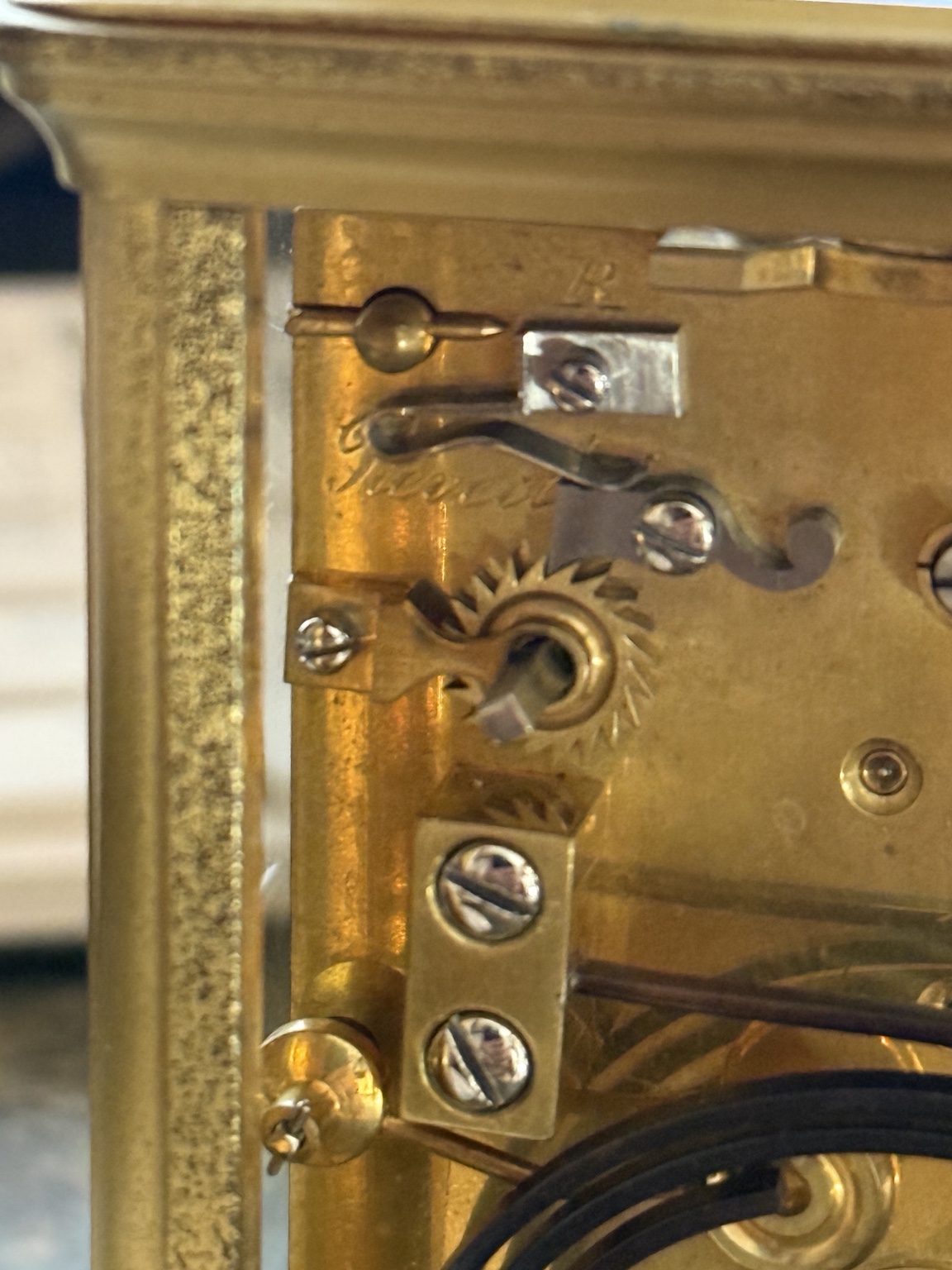
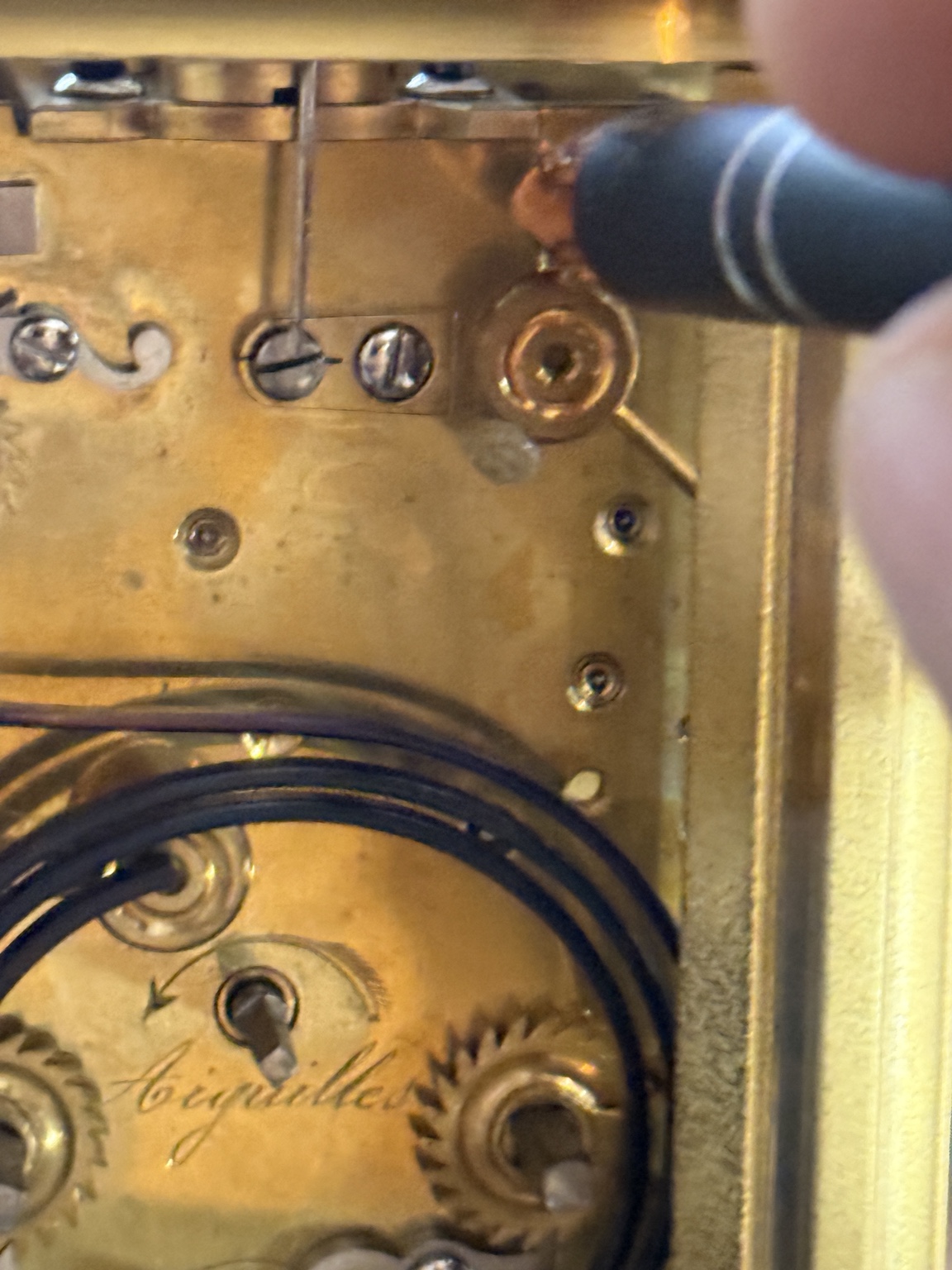
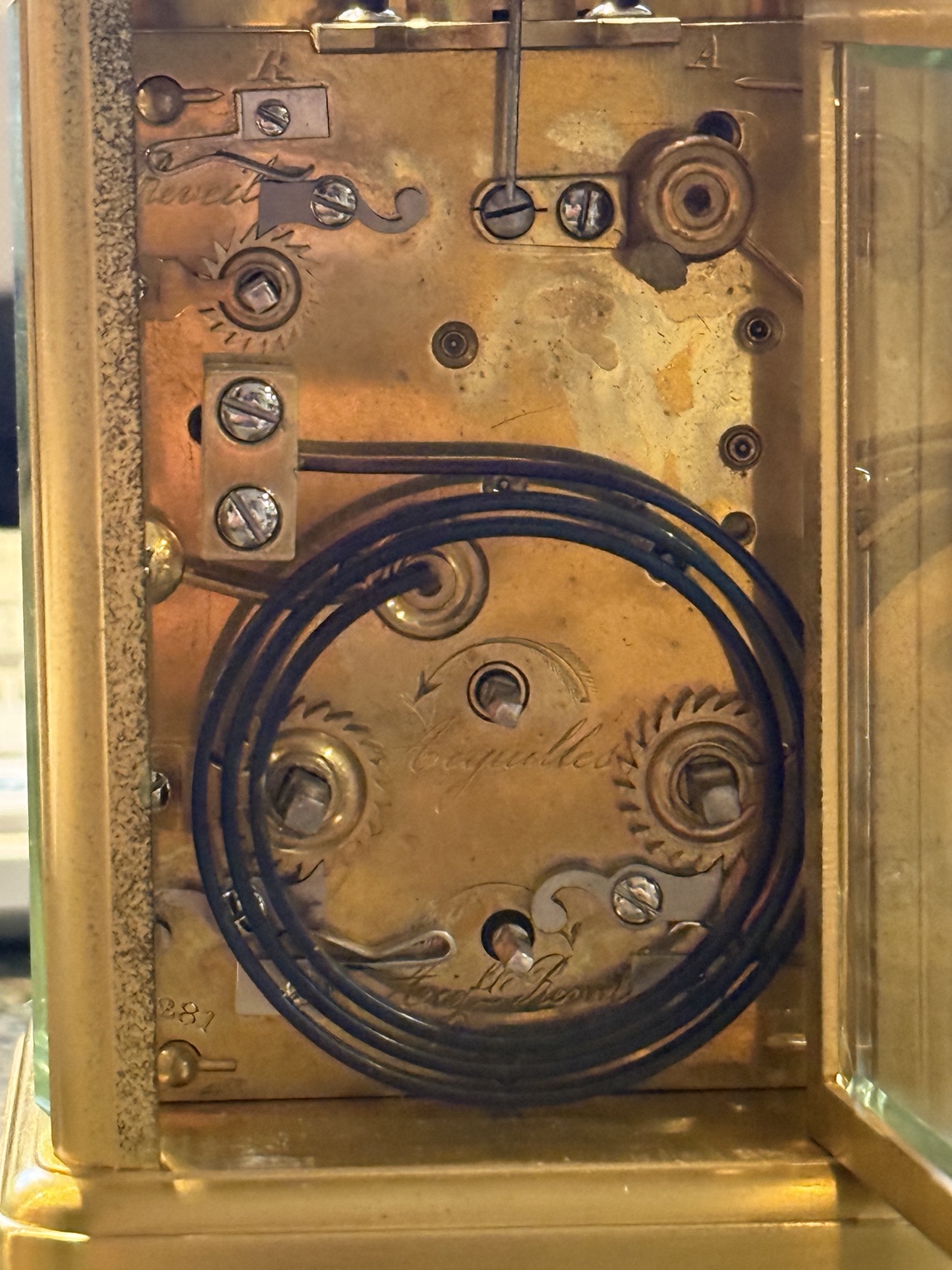
Elegant Austrian gilt-brass carriage clock with beveled glass panels and carrying handle, fitted with an eight-day spring-driven movement incorporating hour and half-hour strike on a coiled gong, alarm, and repeating mechanism. The movement is signed "Baumann" and bears the serial number 387. The original fitted leather traveling case retains its silk retailer's ribbon printed in gold:
F. BAUMANN
WIEN
It weighs 1,140 grams and the case weighs 300 grams. It is 4" square and 5 3/4' high in its case.
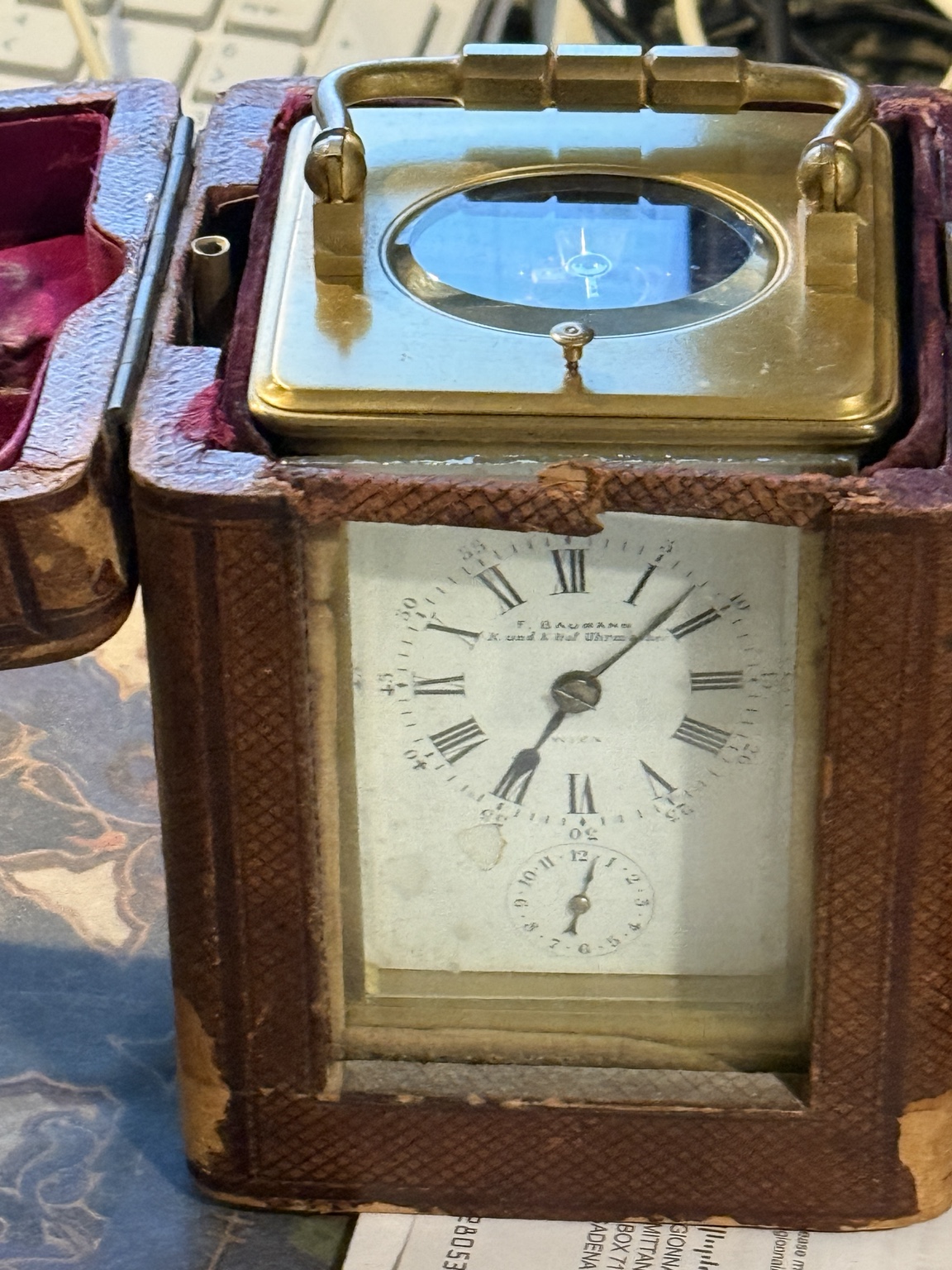
The white enamel dial is signed:
F. Baumann
K.u.K. Hof-Uhrmacher
Wien
The subsidiary dial at six o'clock controls the alarm setting. The clock retains its original jeweled platform escapement and appears substantially complete and unrestored. It was overhauled in Geneva in 1990.
The movement itself is engraved "Baumann", and the original fitted case bears the gold-stamped retailer's ribbon: F. Baumann – Wien
This is important because the name appears in two original places:
Research confirms that Friedrich Baumann was one of Vienna's leading court watchmakers and jewelers. He traded as K.u.K. Hof-Uhrmacher (Imperial and Royal Court Watchmaker), with premises at Graben 7 and workshops on Singerstraße in Vienna. He inherited the business of Franz Schöndorfer and won medals at major international exhibitions from the 1870s through the early 1900s.
1887 – Presented by Vladimir Grigorovitch Korobyine to his son Vladimir Vladimirovitch Korobyine on the occasion of his twenty-first birthday, immediately before his first diplomatic appointment to the Imperial Russian Legation in Serbia.
1934 – Presented by Vladimir Vladimirovitch Korobyine to his son Andrew Mouravieff-Apostol-Korobyine on his twenty-first birthday.
1968 – Presented by Andrew Mouravieff-Apostol-Korobyine to his son Nicholas Mouravieff-Apostol-Korobyine on his twenty-first birthday.
The clock has remained continuously within the direct family line for nearly 140 years, making its provenance both complete and exceptionally well documented.
More than an elegant late nineteenth-century carriage clock, this object symbolizes the continuity of the Mouravieff-Apostol-Korobyine family across four generations.
Presented at the beginning of Vladimir Vladimirovitch Korobyine's diplomatic career in 1885, the clock accompanied a family whose history encompassed Imperial Russia, the diplomatic service, revolution, exile, and eventual preservation of one of the most important surviving private archives relating to the Decembrists and the Mouravieff-Apostol family.
Its uninterrupted descent from father to son gives it historical significance well beyond its horological importance.
The movement remains complete and signed by the maker, retaining its original platform escapement, striking, alarm, and repeating mechanisms. The original fitted traveling case survives with its velvet interior and Baumann retailer's ribbon. Normal wear to the leather case is consistent with age and use.