Ships, Aeroplanes, Automobiles and Trains
SHIPS
AIRCRAFT
AUTOMOBILES
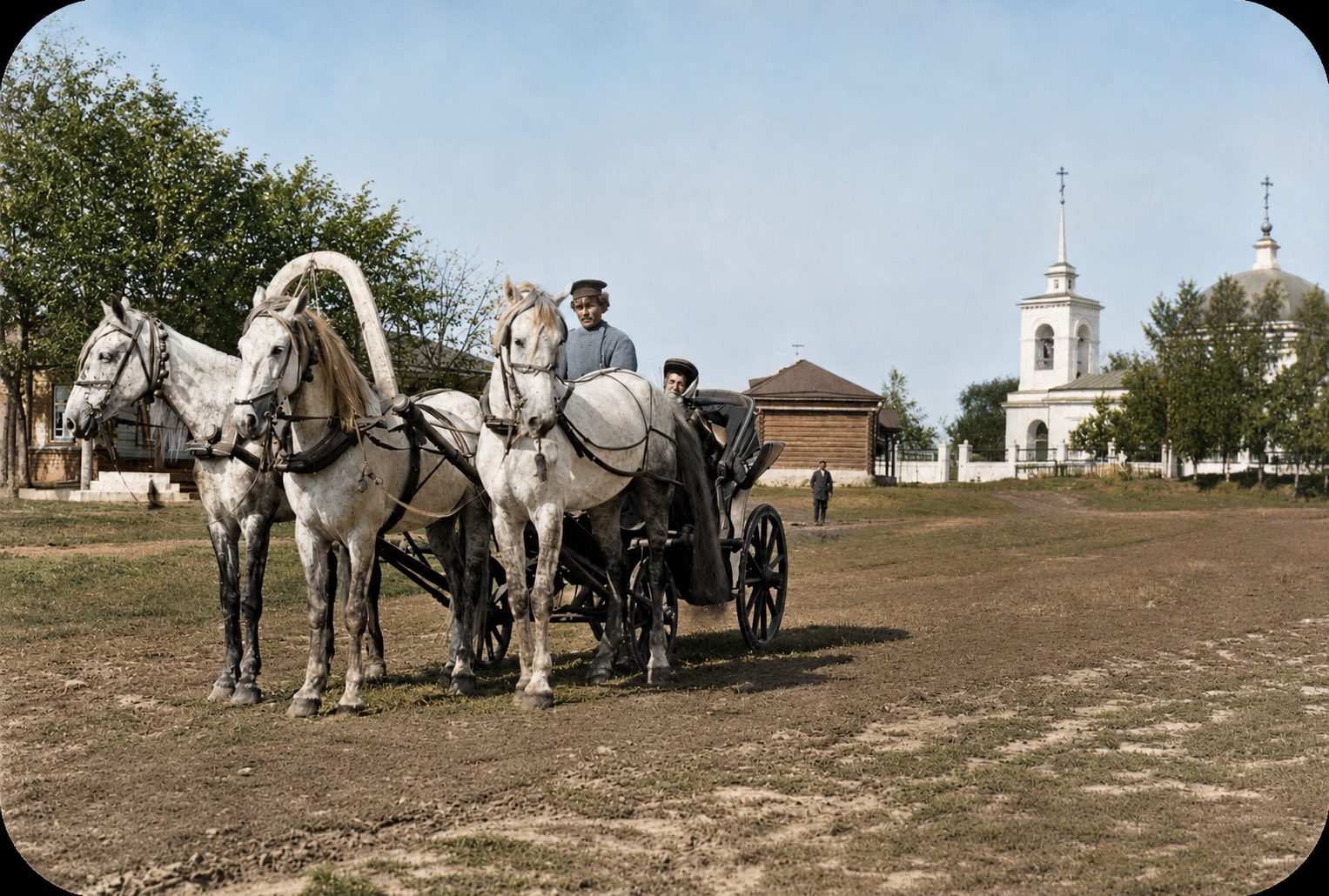
Little evidence has yet been identified that the Tereshchenko family owned or regularly used private automobiles before the First World War. Available family tradition instead emphasizes their use of a privately fitted railway train or group of salon carriages for long-distance travel between the Martynovsky estate, Vienna, Paris, Cannes, and other European destinations. Local transport was primarily horse and carriage or common was the "Troika". However, vehicles no doubt existed in the inventory of assets of the sugar companies and other entities owned by the Tereshchenko family.
Alexander Nikolovich Tereshchenko (1856–1911), the younger son of Nikola Artemievich Tereshchenko, was described as a “well-known motorist” in Kyiv. In September 1904, while driving near the Sviatoshyn dachas on the Zhytomyr road, his automobile struck Professor Nikolai Tsitovich, who was riding a bicycle. This establishes automobile use or control by a member of the Tereshchenko family by 1904, although the published account does not identify the automobile’s manufacturer.
There is also a second promising clue involving Alexey Sakhnovsky, a grandson of Nikola Tereshchenko through Eufrosinia Nikolaevna. Biographical material says his interest in automotive design was encouraged by the family’s Mercedes automobile.
Ukraine State Archives record references to an automobile by Fedor Fedorovitch Tereshchenko in Fund 830, Inventory 2, File 47 — “Drawing of a passenger automobile of F. F. Tereshchenko. 1911.” One sheet.
SUMY records show that at the time numerous vehicles were registered from makers including Benz, Peugeot, Ford, Fiat, Opel, Darracq, Berliet, Mitchell, Case and Hupmobile.
A Tereshchenko riding in a Troika in Popova Sloboda around 1900
TRAINS
The Tereshchenko Private Train
According to longstanding family tradition, Nadezhda Fedorovna Tereshchenko—who inherited the Martynovsky estate and sugar factory under the will of her father, Fedor Artemievich Tereshchenko, following his death in 1894—had the use of a private train composed of two or three specially fitted salon and sleeping carriages. The carriages travelled between the Martynovsky property in Ukraine and Vienna, Paris and Cannes. At the Russian–Austrian frontier, their Russian broad-gauge bogies were reportedly exchanged for European standard-gauge bogies, permitting the same carriage bodies to continue over Austrian and French railways. Family history further records that the carriages remained in Italy during the First World War. The existence and ultimate fate of the cars await confirmation through railway and family archives.