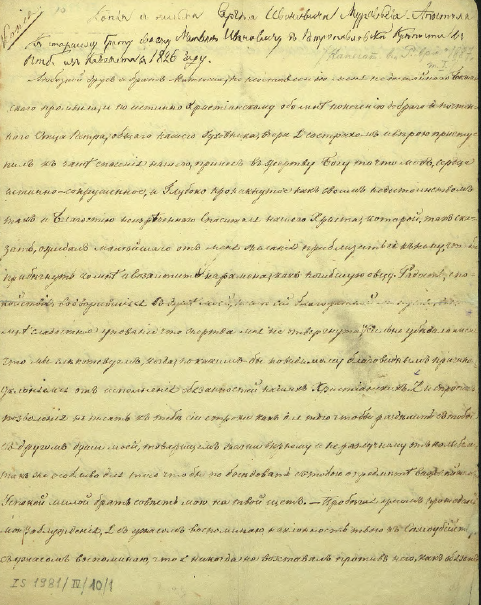
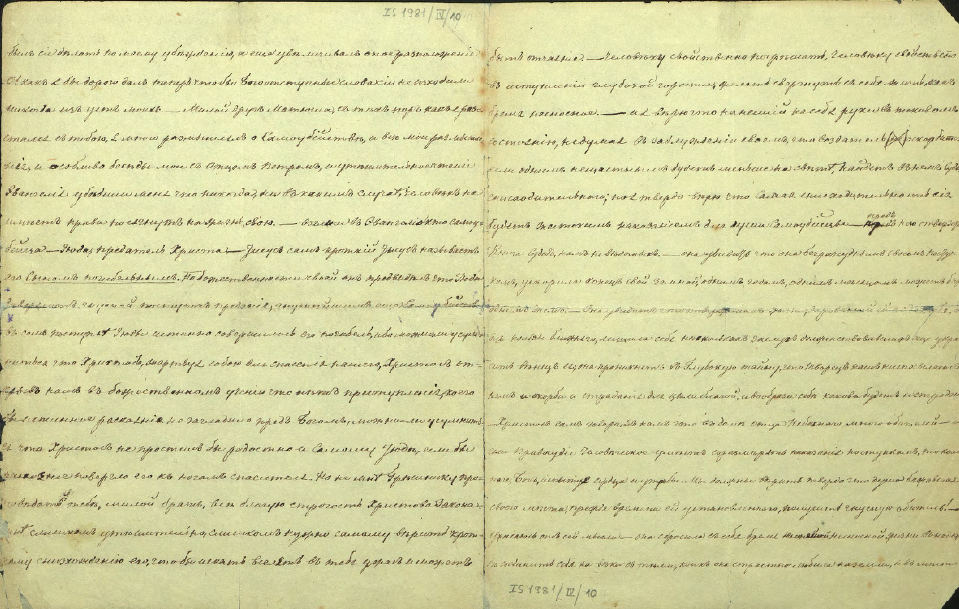
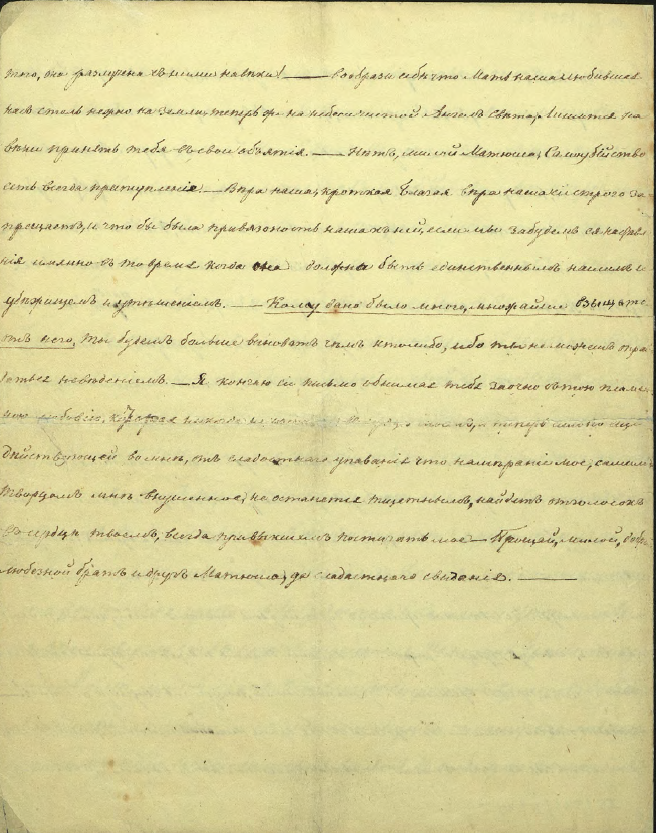
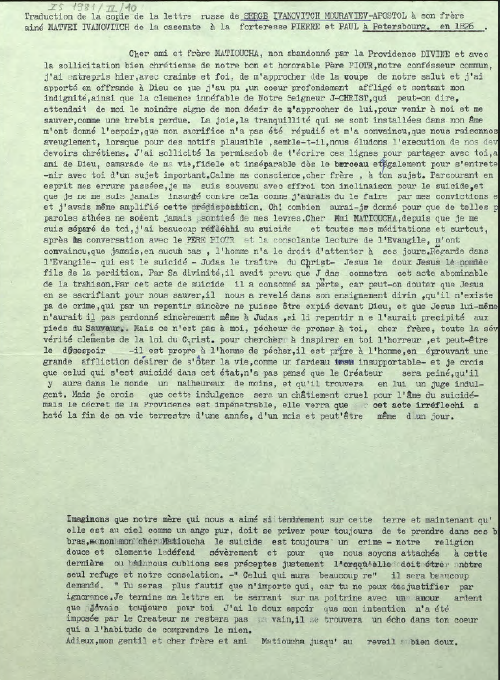
Sent on 24 January 1826 from his prison cell in Peter and Paul Fortress in St. Petersburg
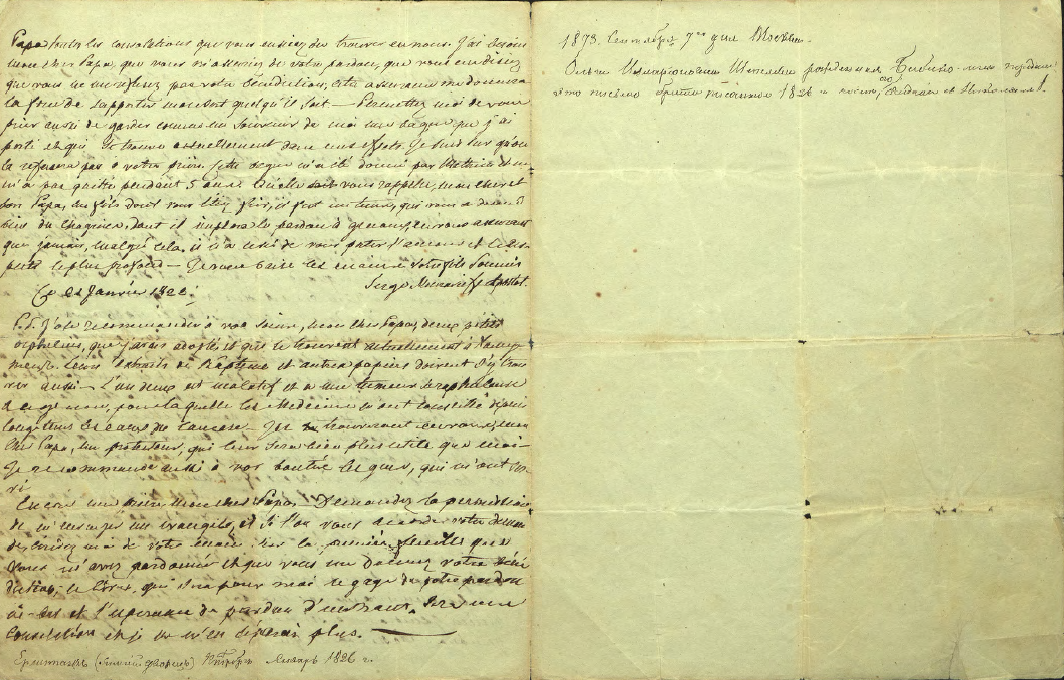
Letter is written in Russian to his older brother
Sent on 24 January 1826 from his prison cell in Peter and Paul Fortress in St. Petersburg
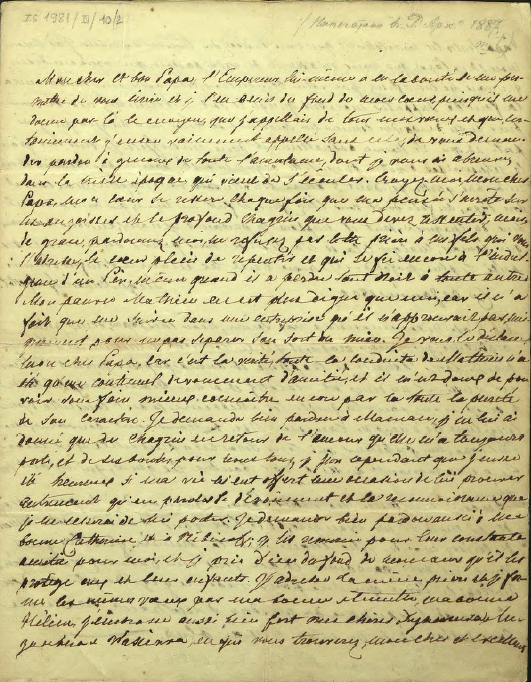
Letter written in French which was Ivan's preferred language
SERGEI IVANOVITCH MOURAVIEFF-APOSTOL
LETTER TO HIS FATHER IVAN MATVEEVITCH MOURAVIEFF-APOSTOL
Historical Summary and Editorial Notes
Document Description
This document is a French-language letter written by Sergei Ivanovitch Mouravieff-Apostol to his father, Ivan Matveevitch Mouravieff-Apostol, following the failure of the Decembrist uprising and during Sergei's imprisonment in early 1826. The letter is a farewell communication in which Sergei asks forgiveness from his father, expresses concern for members of his family, makes several personal requests, and commends two children to his father's protection.
Editorial Observations
1. Language - The letter is written entirely in French, consistent with the linguistic customs of many Russian aristocratic families of the period and Ivan spoke French by choice rather than Russian..
2. Ring - One of the most important personal passages concerns a ring belonging to Sergei. The letter states: "Cette bague m'a été donnée par Matthieu..." ("This ring was given to me by Matthieu...")
Sergei explains that he has worn the ring continuously for five years and asks that it be preserved as a remembrance. The passage establishes a direct and affectionate connection between Sergei and his brother Matvei.
3. Request for Forgiveness - Throughout the letter Sergei repeatedly seeks his father's pardon and blessing. The tone is deeply emotional and reflects a son preparing for the possibility of death while attempting to reconcile with his father.
4. The Postscript Concerning Two Children - The postscript is among the most significant sections of the document. Sergei writes: "J'ose recommander à vos bontés, mon cher Papa, deux petits orphelins que j'avais adoptés..." ("I venture to commend to your kindness, my dear Father, two little orphans whom I had adopted...")
The postscript further indicates:
The document does not establish that the children were Sergei's biological offspring. It does, however, establish beyond doubt that Sergei felt a strong personal obligation toward two specific children and wished their welfare to be secured after his death.
Together these elements make the letter an important source both for the history of the Mouravieff-Apostol family and for understanding Sergei's state of mind during the final months of his life.